
In major cardiovascular, orthopedic, and trauma surgeries, managing acute intraoperative blood loss represents a time-critical clinical challenge. Delayed recognition of rapid hemorrhage leads to severe hypovolemic shock, organ ischemia, and increased perioperative mortality.
Historically, intraoperative transfusion decisions rely on periodic manual blood draws sent to central laboratories for hemoglobin and hematocrit analysis. However, lab turnaround times often take 20 to 40 minutes—a dangerous delay when a patient is actively hemorrhaging. As a result, surgical teams are often forced to choose between waiting for delayed lab results or empirically ordering massive transfusion protocols, which risks wasting scarce donor blood products and causing transfusion-related complications.
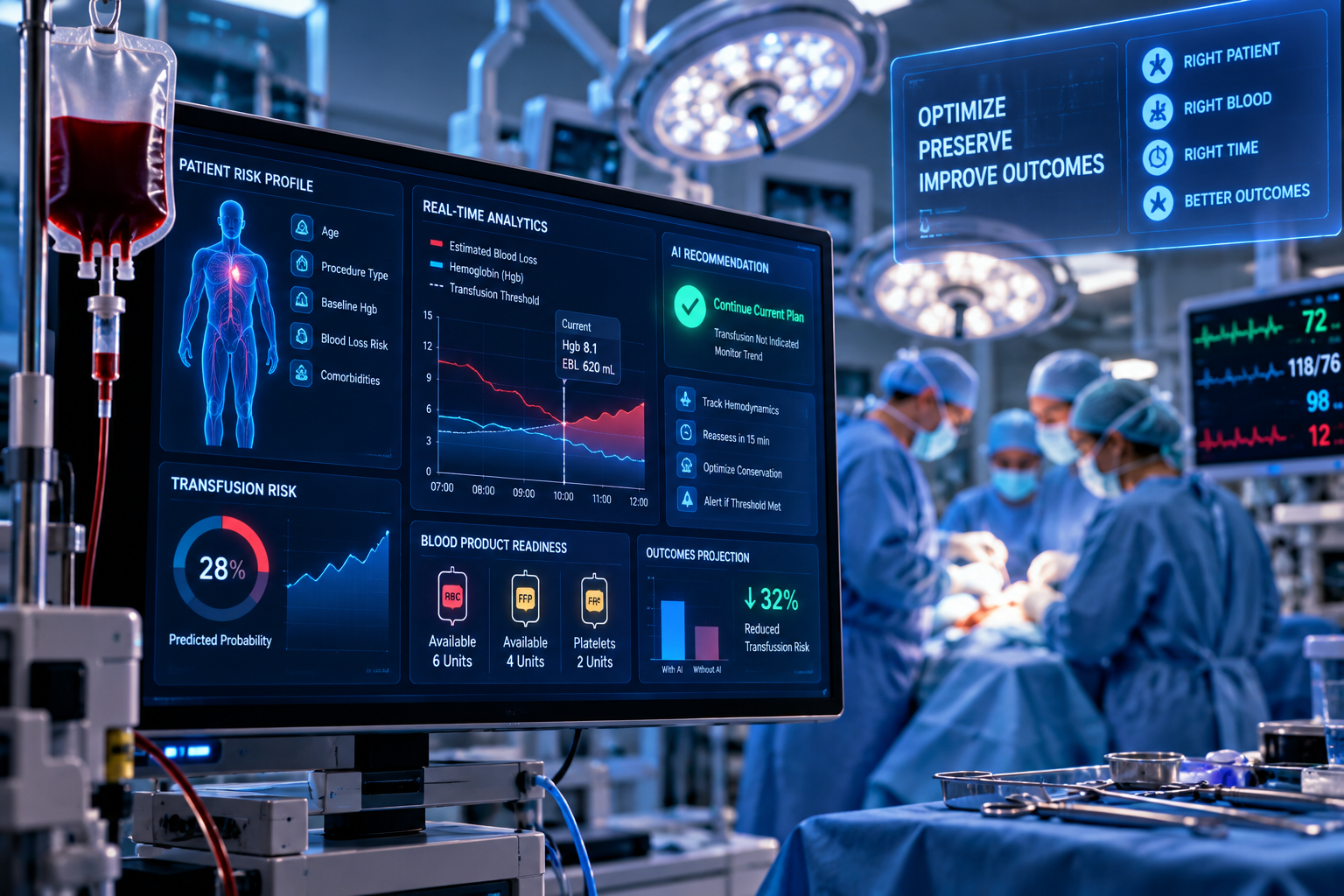
To optimize patient safety and blood product utilization, health systems are implementing Real-Time Perioperative Blood Management Engines connected directly to OR Telemetry and Anesthesia Workstations. By continuously analyzing streaming physiological metrics, hemoglobin monitoring, and suction canister volume sensors, these systems predict acute transfusion requirements well before critical blood loss occurs.
Accelerating Intraoperative Blood Management: Delayed Lab Testing vs. Real-Time Analytics
Predictive analytics replace reactive lab waiting periods with continuous risk evaluation.
[Streaming Anesthesia Telemetry & Optical Suction Sensors]
│
▼
[GoLiveX Real-Time Blood Management Engine]
│
(Calculates Hemorrhage Velocity & Viscosity Drift)
│
▼
[Predictive Blood Product Order Prompt Delivered to Blood Bank]
Operational Comparison: Legacy Blood Management vs. Real-Time OR Analytics
| Clinical Vector | Traditional Intraoperative Protocol | GoLiveX Real-Time Perioperative Engine |
| Hemorrhage Detection | Reactive; based on visual estimates and delayed lab results. | Predictive; continuously tracks vital trends, pulse co-oximetry, and sensor data. |
| Data Collection | Intermittent laboratory blood draws every 30 to 60 minutes. | Continuous real-time streaming of physiological metrics and fluid loss velocity. |
| Blood Bank Coordination | Manual phone calls after active bleeding is visually confirmed. | Automated alerts notify blood banks ahead of time to prepare specific blood components. |
| Transfusion Precision | High risk of over-transfusion or delayed resuscitation. | Targeted; algorithms recommend exact component ratios based on real-time deficit models. |
Primary Strategic Benefits for Surgical Services and Blood Banks
- Early Hemorrhage Alerting: Advanced velocity algorithms detect subtle, combined shifts in pulse pressure variation, continuous hemoglobin monitoring, and heart rate before systemic hypotension presents.
- Reduction in Donor Blood Waste: Accurately predicting actual transfusion needs prevents premature thaw and expiration of plasma and platelet units in the operating room.
- Automated Patient Blood Management (PBM) Compliance: Integrated decision support ensures intraoperative transfusions strictly adhere to evidence-based clinical practice guidelines.
Key Takeaways
- The Transfusion Race: Overcoming lab turnaround delays is critical during rapid intraoperative hemorrhage events.
- Continuous OR Telemetry: Streaming sensor data surfaces early blood loss trends long before standard blood pressure drops occur.
- Optimized Blood Bank Supply: Automated notification protocols streamline blood preparation and reduce wastage of vital donor units.
- Improved Surgical Survival: Early, targeted transfusion guidance minimizes tissue ischemia and reduces post-operative surgical complications.
To learn more about how organizations govern AI deployments securely, watch this video on AI trends and governance models for enterprise software.
This video provides an expert overview of AI governance and operational frameworks that help companies implement secure, auditable, and resilient automation strategies.
Leave a Reply