
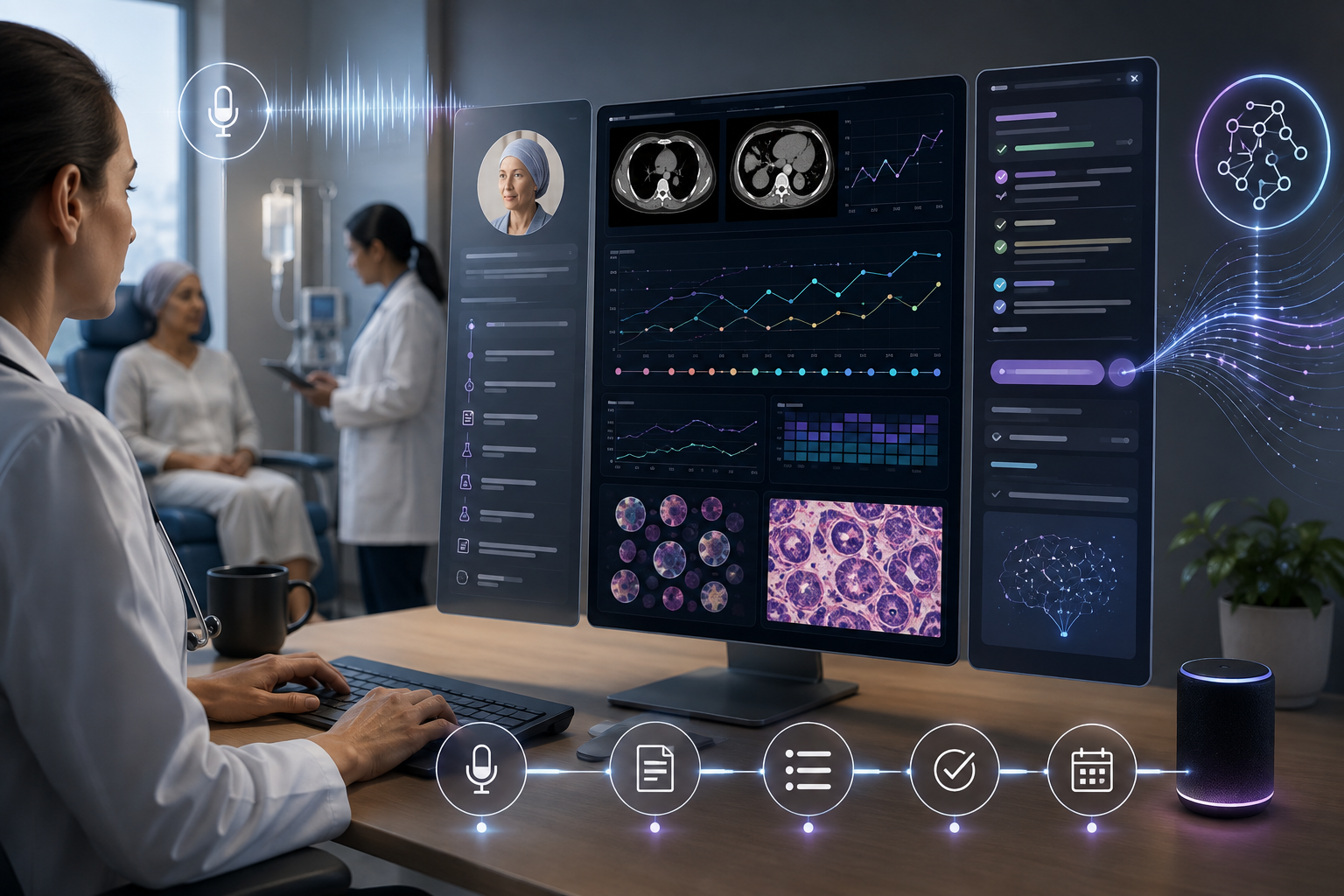
Documentation in specialized medical disciplines—particularly oncology—presents unique challenges for standard ambient documentation tools. Unlike routine primary care visits focused on immediate symptoms, an oncology consultation requires synthesizing multi-year patient histories, tracking complex chemotherapy protocols, interpreting genomic biomarker panels, and coordinating multi-specialty care plans.
First-generation ambient scribes often struggle with these complex environments. They generate basic SOAP notes focused only on the current consultation, ignoring past treatment lines, radiation summaries, and disease progression trends scattered across hundreds of historical EHR pages.
To address these needs, health systems are deploying specialized Ambient Clinical Intelligence (ACI) platforms for Oncology. These advanced platforms combine ambient voice processing with real-time longitudinal EHR data parsing, generating structured oncology notes that reflect the full arc of patient care.
Bridging the Gap: Primary Care Scribes vs. Longitudinal Oncology ACI
Understanding the structural differences between general ambient transcription and specialized longitudinal intelligence is critical for specialty care IT deployment.
[Primary Care Scribe] ──► Captures Current Audio ──► Generates Single Encounter Summary
[Oncology ACI Engine] ──► Captures Current Audio
│
├───► Integrates Historical EHR Data (Labs, Biopsies, Prior Regimens)
│
▼
[Generates Longitudinal Cancer Care Note]
Feature Comparison: Standard Scribes vs. Oncology-Specific ACI
| Workflow Requirement | Standard Primary Care Scribe | Specialized Oncology Ambient AI |
| Data Scope | Single-encounter conversation. | Multi-year longitudinal history + live consultation context. |
| Oncology Vocabulary | Basic medical terminology; misses complex drug protocols. | Native mapping of TNM staging, biomarker markers, and NCCN clinical guidelines. |
| Treatment Tracking | Captures current medications discussed in the room. | Automatically tracks line-of-therapy history and cumulative drug dosage limits. |
| EHR Integration | Dumps unstructured narrative text into clinical notes. | Populates structured oncology flowsheets, tumor registry fields, and order templates. |
Key Clinical Benefits in Specialized Care
- Automated Staging & Biomarker Summaries: The platform parses pathology reports and genomic testing feeds to maintain auto-updated diagnostic summaries within the clinical record.
- Line-of-Therapy Tracking: The system recognizes adjustments to chemotherapy, immunotherapy, or targeted therapy plans, mapping shifts against established treatment timelines.
- Multi-Disciplinary Handoff Efficiency: By structuring documentation around longitudinal timelines, cancer care teams (surgical, medical, and radiation oncologists) access unified patient state overviews during tumor board reviews.
Key Takeaways
- Specialty Complexity: Complex medical specialties require documentation tools that integrate multi-year historical data alongside live room audio.
- Longitudinal Context: Oncology-specific ambient intelligence tracks disease progression, treatment lines, and biomarker data across long care journeys.
- Structured Data Capture: Converting clinical conversations into structured EHR fields supports research, trial matching, and tumor registry reporting.
- Reduced Provider Burden: Automating complex specialty documentation allows oncologists to focus on patient communication and care planning.
Leave a Reply