
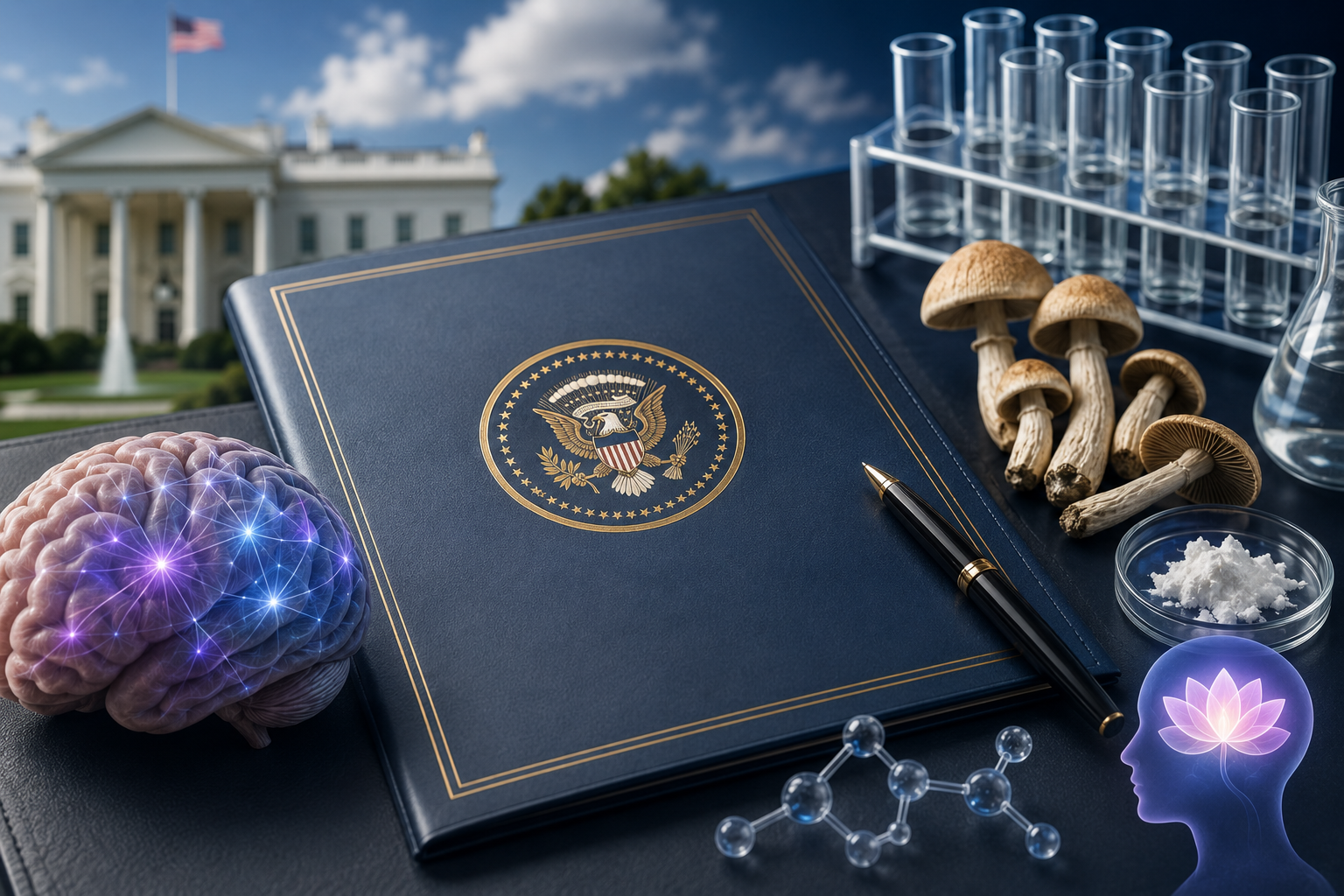
Donald Trump has signed a new executive order aimed at accelerating the research, approval, and access to psychedelic drugs for treating serious mental illnesses, marking a significant shift in federal health policy.
With more than 14 million U.S. adults affected by serious mental illness and suicide rates rising sharply over the years, the move signals growing urgency around alternative treatment options, including substances like ibogaine.
Here are four key takeaways:
- Fast-tracked FDA review
The order prioritizes the U.S. Food and Drug Administration review of psychedelic therapies that have received “breakthrough therapy” designation, aiming to speed up approval timelines. - Expanded patient access pathways
Both the FDA and the Drug Enforcement Administration are tasked with creating pathways for patients to access these treatments under the Right to Try Act, potentially opening doors for individuals with limited options. - Federal funding boost
The U.S. Department of Health and Human Services will allocate at least $50 million through the Advanced Research Projects Agency for Health to support state-led research and clinical programs. - Broader research and data efforts
Federal agencies, including HHS, FDA, and the U.S. Department of Veterans Affairs, are directed to expand clinical trials, improve data sharing, and generate real-world evidence for these therapies.
The bigger picture:
Psychedelic compounds like ibogaine, classified as a Schedule I substance since 1970, have long been restricted due to concerns about safety and abuse potential. However, emerging studies suggest potential benefits for conditions such as addiction, depression, and traumatic brain injury, especially among veterans.
This executive order reflects a growing willingness to revisit those restrictions, but it also raises important questions around safety, regulation, and the pace at which these treatments should be introduced into mainstream care.
Leave a Reply