Category: News

  • EMRs and the Puzzle of Workflow: Why Integration Matters More Than Ever

    EMRs and the Puzzle of Workflow: Why Integration Matters More Than Ever

    You can’t force a machine into a heartbeat.

    There’s a nurse who rounds with a tablet in one hand and a patient’s trembling hand in the other. She’s trying to listen to a story about meds, allergies, and the way a child’s laugh sounds when remembering a grandfather, and the screen keeps demanding things that don’t belong in that moment. That tension is the whole problem: EMRs that don’t fit human rhythm turn care into a series of interruptions. Integration is the patient centered antidote.

    The problem in one breath

    EMRs were meant to weave information into care. Too often they become seams that snag: multiple clicks to record a single observation, duplicate entries in three systems, and alerts that scream without context. The result is fractured attention, stretched compassion, and time stolen from bedside moments.

    Why integration is more than tech it’s choreography

    Think of a hospital as an orchestra. Clinicians are musicians. Patients are the music. An integrated EMR is the conductor who knows the score and cues the right instrument at the right time. Without it, the music becomes noise.

    When systems talk to each other, workflows stop being a tangle of handoffs and start being a flow:

    • labs appear where they should, not where someone remembers to print them;
    • medication history travels with the patient, not as a fragmented story.
    • Triage, imaging, and specialty notes cascade into the chart as a single narrative, not as separate monologues.

    That’s the difference between an EMR that stores data and one that serves care.

    Real pain points (the human toll)

    • Context switching: Clinicians juggle screens instead of holding a patient’s gaze.
    • Duplicate documentation: Time spent copying data is time lost for empathy.
    • Alert fatigue: Urgent tones for trivial matters erode trust in the system.
    • Broken handoffs: When data doesn’t travel, families repeat trauma at every desk.

    These aren’t abstract frustrations. They’re the reason a parent waits longer, why a nurse skips a break, and why a clinician dreams of simpler days.

    How EMRs should adapt to human rhythm: practical, humane moves

    1. Map real workflows, not ideal ones.
       Watch clinicians do their work. Shadow mid-shift. Document the real steps, the workarounds, and the whispered hacks. Technology must mirror real practice, not the glossy version shown in demos.
    2. Co-design with end-users.
       Put nurses, physicians, pharmacists, and receptionists at the design table. Their small fixes, which reword a prompt or remove a required field, often yield the biggest relief.
    3. Make data move with the patient.
       Seamless interoperability (the kind that respects context and ownership) prevents story loss. When a patient crosses systems, their narrative should cross with them complete and legible.
    4. Prioritize context aware interfaces.
       Show what matters now: the bedside view should surface vitals and recent meds; the clinic view surfaces chronic care plans. Same patient, different lens
    5. Voice & natural interactions where it helps.
       Voice to note and smart templates let clinicians speak the story while keeping hands available for care. But keep corrections easy and visible; the voice is an assistant, not a dictator.
    6. Intelligent alerting, not alarm storms.
       Tune thresholds, cluster related notifications, and introduce “soft alerts” that suggest rather than demand. Trust returns when alerts respect judgment.
    7. Measure the right things.
       Track minutes regained at the bedside, reduction in repeat history calls, and clinician satisfaction, not just uptime and CPU cycles.
    8. Train, iterate, and listen forever.
       Integration is continuous. Run short pilots, collect rapid feedback, fix fast, and celebrate small wins. Make super-users and clinical champions the permanent bridge between IT and care.
    9. Design for downtime & degraded modes.
       If the system fails, clinicians must still have graceful, fast paperless fallbacks portable views, sync queues, and offline modes that reconcile later.
    10. Governance that centers care.
       Create cross-discipline councils (clinicians, IT, ops, patients) that decide which workflows change and why, so upgrades don’t arrive as surprises.

    A small example you can taste

    Imagine an ED where the triage tablet auto-populates prior visits, allergies, and last-seen vitals. The nurse’s shorthand notes convert into a succinct history the doctor reads aloud at bedside. Orders flow to the lab automatically, and when results come, a single contextual alert arrives: “Troponin rising; consider cardiology consult.” No separate logins, no repeated questions, just a thread of care. That’s the heartbeat returning.

    The quiet payoff

    Integration isn’t flashy. It doesn’t look good on a slide. But it returns what matters: time at the bedside, fewer repetitive tasks, clearer handoffs, and less burnout. It turns EMRs from gatekeepers into companions systems that move with care rather than forcing clinicians to move around them.

    Final thought: an invitation

    You can’t force a machine into a human heartbeat. But you can design systems that learn the rhythm. Start by listening really listening to the people who do the work. Map their steps. Build from there. Because when EMRs follow the human pulse, everything else falls into place: safer decisions, kinder encounters, and a care system that finally sounds like a song instead of a clatter of keys.

  • Finding the Right Fit: How U.S. Facilities Choose Their EMR Systems

    Finding the Right Fit: How U.S. Facilities Choose Their EMR Systems

    It’s not about the flashiest features, it’s about who listens, who lasts, who learns with you.

    Choosing an EMR is not like buying the newest phone or the latest gadget.

    It is more like choosing a partner one you’ll live with, rely on, and grow old alongside.

    Hospitals don’t just want shiny dashboards and endless tabs of features. They want trust.

    They want a system that doesn’t just sell solutions but solves problems.

    In a rural clinic in Kansas, the decision came down to a single question: “When our Wi-Fi goes out and it always does, will the system still let us care for our patients?”

    In a New York teaching hospital, it wasn’t the colors on the interface that mattered but whether residents could chart during chaos without missing a heartbeat.

    And in a small community hospital in Mississippi, the deal was sealed not by a demo but by a vendor who sat with the nurses, listened to their worries, and rewrote workflows to match the way they worked, not the other way around.

    The right fit is rarely the loudest pitch. It’s the quiet promise of support at 2 a.m.

    It’s the EMR that learns alongside the staff, bending when humans cannot.

    It’s the partner who stays through upgrades, setbacks, and growing pains never leaving clinicians stranded mid-shift with a frozen screen and a silent helpline.

    Flash will fade. Features will evolve.

    But what endures is the relationship the EMR that listens, lasts, and learns with you.

    Because in healthcare, it’s not just about software.

    It’s about people finding systems that let them do what they were called to do: care.

  • The EMR Learning Curve: A Love Letter to the Confused, the Overwhelmed, the Still-Learning

    The EMR Learning Curve: A Love Letter to the Confused, the Overwhelmed, the Still-Learning

    It’s okay not to get it all at once. This post is for the strugglers, the skeptics, the silent fighters.

    This is not a manual.

    This is not a training video with too many acronyms and too few pauses.

    This is a love letter to you.

    To the nurse staring at the blinking cursor, willing the notes to make sense.

    To the physician fumbling through dropdown menus, aching to return to the patient instead of the screen.

    To the tech who hides their frustration behind polite nods, though their heart whispers, “I used to be faster with paper.”

    The EMR learning curve is steep sometimes cruel, sometimes kind. It demands patience when patience feels like a luxury. It tests confidence, rattles routines, and asks seasoned hands to become beginners again.

    But hear this: you are not failing.

    You are learning.

    And learning is messy, beautiful work.

    Every sigh, every muttered curse, every late-night click through unfamiliar workflows. It is proof of your resilience. You are building new muscle, neuron by neuron, click by click. And one day, what feels like stumbling will become second nature, the way muscle memory turns chaos into choreography.

    To the skeptics: your doubt is valid. To the overwhelmed: your struggle is real. To the still-learning: you are not alone.

    Every keystroke is a quiet act of courage. Every login, a small vow to keep going.

    So take your time. Forgive the missteps. Celebrate the tiny victories a successful order placed, a chart closed without tears, a shortcut remembered at last.

    Because the truth is, this curve does not bend to shame. It bends to persistence.

    And at its summit waits something worth the climb: less clutter, faster clarity, more time for the people who matter most.

    So here’s to you, the strugglers, the skeptics, the silent fighters.

    May this letter remind you: the curve is not a wall.

    It is a path.

    And you are already walking it.

  • Building the Backbone: What Makes a Truly Great EMR Support System?

    Building the Backbone: What Makes a Truly Great EMR Support System?

    Behind every smooth system lies an invisible scaffolding; discover the soul of EMR support.

    There’s a moment in every hospital when technology fades into the background, a vital lab result appears without a glitch, a chart update flows seamlessly, and clinicians are free to simply care. Behind that moment lies a hidden symphony of support: the unsung heroes and guiding processes that keep EMRs alive and compassionate.

    1. The Guardians Who Never Sleep

    In a quiet command center, support engineers monitor dashboards like lighthouse keepers watching for distant storms. They sense flickers in network traffic, anomalies in database performance, and whispers of failing backups responding before the first clinician’s brow furrows. Their vigil is silent, their triumphs invisible, yet every uninterrupted minute of uptime carries their devotion.

    “I once caught a storage cluster overheating at 2 AM,” says Raj, a support lead. “By the time nurses logged in, the system purred like dawn’s first light.”

    2. Empathy, Not Scripts, in Every Call

    When a nurse dials the help desk, she’s often in crisis mode, charting for a code blue, juggling medications, and racing against time. A truly great support system answers not with canned responses, but with empathy: calm voices that listen, validate, and guide. They know that behind each ticket is a life in the balance, and they treat data with the tenderness of a patient’s hand.

    “I’m not just fixing a bug,” shares Maria, a support specialist. “I’m giving Dr. Lewis back five minutes at Mrs. Carter’s bedside.”

    3. The Ritual of Readiness

    Support isn’t only reactive; it’s proactive. Rigorous “fire drills” simulate crashes, network outages, and patch failures. Teams rehearse recovery steps until they flow like a well-rehearsed dance. Documentation detailed yet human lives in shared wikis, updated at the speed of each new release. In these rituals, readiness becomes second nature.

    “When the Cerner upgrade failed at Mercy Hospital, our team flipped to Plan B in under ten minutes,” recalls Ahmed, an escalation manager. “It felt like we’d rehearsed it a thousand times because we had.”

    4. A Community of Champions

    Great EMR support extends beyond one vendor’s walls. It blooms in networks of peer hospitals, vendor user groups, and online forums where best practices are traded like precious seeds. Here, a small rural clinic learns life-saving tips from a major academic centre; a children’s hospital shares voice-recognition breakthroughs with a veterans’ system. This community scaffolding turns isolated struggles into shared victories.

    “We solved our reporting lag thanks to a tip from a colleague in Wisconsin,” says Lori, CIO of a critical access hospital. “That forum post saved us months of frustration.”

    5. Continuous Care for Continuous Care

    An EMR is a living organism, evolving with new features, regulatory shifts, and emerging threats. A great support system weaves training, feedback loops, and security audits into its fabric, ensuring every patch is stewarded, every upgrade uplifted, and every user uplifted. It’s a promise: that as the EMR grows, so too does its capacity to serve.

    “After our annual security drill, we discovered a gap in access controls,” admits Priya, a compliance officer. “We fixed it before an audit even knew it existed.”

    In the end, the soul of EMR support is simple: unwavering vigilance, heartfelt empathy, relentless preparation, collaborative spirit, and an unbreakable promise to keep care at the forefront. When those elements align, technology doesn’t just work; it flows, becoming the quiet backbone upon which modern healing stands.

    And in that smooth hum, clinicians remember why they entered medicine in the first place: to touch lives, unshadowed by screens, guided by compassion.

  • Snapshots of Change: Real Stories from Hospitals Going Paperless in 2025

    Snapshots of Change: Real Stories from Hospitals Going Paperless in 2025

    Every EMR adoption is a silent revolution; meet the nurses, patients, and IT teams living through it.

    There is a hush at dawn in St. Mary’s Hallway, where once the rustle of manila folders wove a constant undercurrent. Now, at the first light, screens glow gently, portals to lives lived in data yet felt in every heartbeat. These are the snapshots of change, where paper gives way to possibility and every click carries a human story.

    1. The Night-Shift Nurse and Her Whispered Relief

    At 3 AM, fatigue drapes itself over Nurse Elena like a heavy shawl. In years past, she would trudge to the chart room, coffee in one hand, pen in the other, hunting for yesterday’s notes amid stacks of paper. Now, she taps her tablet at the bedside.

    “I remember the nights rifling through folders, the fear of missing a note, and the guilt if I did,” she says, voice low. “Tonight, with one glance, I know Mrs. Bennett’s blood sugar trend. I can comfort her rather than battle paperwork.”

    In that quiet glow, Elena finds her compassion reborn, unfettered by forms, guided by data that breathes in time with her patients.

    2. A Veteran’s Return: Healing Beyond Scars

    John, a Marine vet, returns for his monthly check-in. He’s accustomed to routine, to ticking off boxes on intake forms, and to retelling his history for a dozen different hands. But something has shifted.

    His EMR feeds forward the notes from his previous visit: pain levels, medication adjustments, and even his daughter’s prayer card sketch uploaded by social work. When Dr. Liu greets him, she already knows his story; no retelling is required.

    “It was the first time I felt truly seen,” John admits, eyes glinting. “Not a file, but a person, remembered.”

    In the absence of paper, trust fills the space, an invisible thread weaving past to present.

    3. The IT Architect’s Quiet Triumph

    Behind the scenes, IT lead Marcus watches the final cart of filing cabinets wheel away from Radiology. Months of relentless training, countless rounds of feedback sessions, and a week of sleepless deployment have led to this: zero downtime, zero lost images, and zero tears save those of relief.

    “We built a cloud-native archive that indexes every scan as it happens,” he explains, pride softening his exhaustion. “When a surgeon in Boston needs a chest X-ray from Birmingham, it appears instantly. No courier, no delay, just care on demand.”

    His triumph is invisible to most, yet its impact radiates through every saving.

    4. The Surgeon Redeeming Time

    In the operating suite, Dr. Ramirez closes her eyes before the first incision. Once, she’d review paper charts while scrubbed, risking contamination or misreading scribbles. Now, a sterile touchscreen floats beside her; gestures summon notes, lab values, and real-time vitals without a single glove change.

    “I feel invincible,” she laughs, though the relief in her tone is real. “I’m not toggling between workarounds. I’m present with my hands, my mind, and my patient.”

    In that union of scalpel and screen, the surgeon rediscovers the sacred space of focus.

    5. The Family’s Quiet Gratitude

    In a sunlit waiting room, the Hernandez family clutches their phones. They track Om’s mom’s recovery through a patient portal that feels more like a companion than a system, with daily check-ins, medication reminders voiced in Spanish, and care-team messages that land like warm letters.

    “Before, we feared being left in the dark,” Mr. Hernandez confides. “Now, when the nurse updates her progress, we exhale together as a family.”

    Here, paperlessness carries the light of connection, illuminating lives beyond hospital walls.

    These are not case studies. They are moments of tiny revolutions of care, compassion, and clarity. When the last sheet of paper dissolves into electrons, what remains is more than efficiency. It is the essence of healing: the touch, the gaze, and the memory that binds caregiver to patient.

    In 2025, going paperless is not just an IT milestone; it is a reclaiming of humanity, one quiet revolution at a time.

  • Digital Compass: Why EMRs Are the New North Star for Care Navigation

    Digital Compass: Why EMRs Are the New North Star for Care Navigation

    As clinicians search for clarity, EMRs quietly guide them home to faster answers and gentler outcomes.

    In the vast wilderness of patient data labs, notes, images, and histories clinicians once navigated by memory and instinct alone. Now, a new beacon rises: the Electronic Medical Record, a digital compass glowing softly on every screen, pointing the way toward insight, efficiency, and compassion.

    1. Mapping the Unknown

    When a patient arrives with a tangle of symptoms, the old map of paper charts could leave caregivers lost in the underbrush. An EMR unfurls a seamless trail: past diagnoses, medication changes, and even subtle notes on family concerns, all in one view. It’s as if the forest parts before you, revealing a path etched by every hand that came before.

    2. True North of Precision

    In midnight shifts, when fatigue dulls the keenest eyes, EMR-driven alerts flash like constellations, highlighting critical labs, flagging interactions, and guiding care toward safety. These digital stars don’t shout; they whisper the precise moment of risk, so clinicians can steer their patients away from hidden shoals and into safer harbours.

    3. The Gentle Guide

    Beyond urgent warnings, EMRs offer the quiet counsel of history’s full compass: reminders for overdue screenings, personalized care plans that respect cultural crossroads, and predictive insights that hint at tomorrow’s storms. It’s not just about charting problems; it’s about anticipating detours and smoothing the journey before it even begins.

    4. Shared Maps for Shared Care

    No traveller goes alone. With interoperable EMRs, specialists, nurses, therapists, and social workers all carry the same map updated in real time. A cardiologist in Boston sees exactly what the primary care provider in Boise recorded yesterday. When everyone reads from the same chart, the care expedition becomes a symphony of synchronized steps.

    5. Homeward Bound

    At day’s end, clinicians close their laptops with the peace that comes from knowing no story was lost between digital pages. Patients, too, feel the difference: fewer repeats of “Tell me your history again” and more moments where the doctor’s eyes meet theirs, unburdened by paper. In that simple exchange, the compass fades because both traveller and guide have arrived home.

    EMRs are more than software; they are the North Star for modern medicine, a quiet light that never wavers. As we continue our odyssey through the uncharted realms of health, may we always follow that guiding glow toward clarity, toward connection, and toward care that feels like coming home.

  • When EMRs Fail: Lessons from High‑Profile System Crashes in U.S. Hospitals”

    When EMRs Fail: Lessons from High‑Profile System Crashes in U.S. Hospitals”

    A cautionary tale of downtime, damage, and the rise of smarter systems built from the ashes.

    There is a fragile hush that follows a system failure. Corridors fall silent, screens go dark, and the invisible hum of digital care is replaced by the rustle of paper. In those moments, hope is measured not in code but in the courage of clinicians who refuse to let patients slip through the gap.

    1. The Global IT Meltdown That Stilled America’s Top Hospitals

    On July 19, 2024, a faulty update from a cybersecurity vendor sent 8.5 million Windows machines into oblivion. Hospitals from Mass General Brigham to Memorial Sloan Kettering Cancer Centre watched their EMRs flicker out, non‑urgent surgeries ground to a halt, and vital‑sign monitors fall silent en.wikipedia.org. Nurses clutched paper charts like lifelines as elevators, imaging systems, and badge‑access doors all succumbed to the same blue‑screen fate.

    Lesson: Even the mightiest systems can topple under a single errant patch. Redundancy isn’t optional; it’s the heartbeat of resilience.

    2. Oracle’s ‘Wrong Click’ That Brought Down 39 Hospitals for Five Days

    In April 2025, 39 Community Health Systems hospitals awoke to empty screens when engineers accidentally deleted core database storage during routine maintenance (fiercehealthcare.com). For nearly a week, clinicians reverted to paper charting, surgical schedules frayed, and pharmacists hand‑wrote medications. Yet amid the chaos, staff found unity triaging patients by voice, scrawling vitals in notebooks, and reading back every order to ensure no word was lost.

    Lesson: Downtime procedures, if practiced and ingrained, can carry care through the storm. People, not platforms, are the true pillars of patient safety.

    3. The Silent Outage That Echoed in Every Ward

    A year earlier, a massive software outage sent EMRs like Epic into shutdown across multiple health systems, forcing some facilities to declare internal emergencies and switch entirely to handwritten records (nurse.org). Patients sat in waiting rooms as staff hunted down lab results from stacks of printed reports. Yet in those trying hours, teams rediscovered the human pulse of medicine nurses checking in every hour, doctors making bedside rounds unhurried by alerts, and technicians humming in quiet collaboration.

    Lesson: Crises reveal character. The best‑prepared hospitals are those that train for the worst and lean on each other when screens go dark.

    Rising from the Ashes: Smarter Systems, Kinder Care

    From these ruptures come the blueprints for tomorrow’s EMRs:

    1. Immutable Backups & Rapid Rollbacks
       Golden snapshots of every database can turn back the clock within minutes, not days.
    2. Decentralized Fallback Protocols
       Portable, offline charting apps that sync the moment the clouds clear.
    3. Human First Interface Design
       Fewer clicks, more voice‑enabled entries, and unobtrusive alerts that respect the rhythm of care.
    4. Rigorous “Chaos Engineering”
       Scheduled drills that simulate failures so the next outage feels like déjà vu, not the first fall.
    5. Vendor Clinician Coalitions
       Joint war rooms where engineers and end users craft both prevention and response in real time.

    When the screens finally flicker back to life, the data flows home, and with it returns the quiet hum of possibility. But the true triumph is not in the restoration of bytes; it is in the steadfast hearts of those who ensured no patient was ever forgotten in the dark.

    From the ashes of every crash rises a promise: that our systems will learn, our people will unite, and our care will never again be left powerless.

  • Beyond the Interface Humanizing EMRs in a Machine Driven World

    Beyond the Interface Humanizing EMRs in a Machine Driven World

    Can technology learn empathy? And can EMRs ever truly feel like they belong?

    In the hush before dawn, a doctor’s hand hovers over a screen searching, scrolling, hoping. Across the ward, a nurse pauses at the bedside, guilt tugging at her heart as she exchanges intimacy for input. Between those keystrokes and that quiet compassion lies a question older than wires: Can machines learn to feel?

    1. The Soft Echo in the Circuit

    When Hospital X rolled out its new EMR, it promised speed templates, checkboxes, and drop down menus. What they didn’t anticipate was the ache in every click, as if each form field chipped away at human connection. So a small team of developers and clinicians came together. They replaced sterile prompts with patient narratives: “How did Mrs. Alvarez sleep last night?” instead of “Enter sleep quality.” In those few words, the interface began to listen not just to data, but to the pulse of care itself.

    2. Stories Inked in Pixels

    Consider the young intern who typed her way through rounds, missing the tremor in a patient’s voice. The EMR’s new voice‑recognition feature captured her spoken observations and the catch in her tone, translating them into emotional annotations: “Observe for anxiety.” It didn’t just log facts; it preserved feeling. The next morning, that patient found a chair by the window and a doctor who remembered her fear as vividly as her fever.

    3. When Alerts Become Gentle Reminders

    In a busy ICU, urgent beeps can overwhelm. One hospital reimagined its alert system with colour and cadence inspired by lullabies: soft amber pulses for caution, rhythmic teal for trending stability, and only the starkest red for true emergencies. Nurses report feeling less ‘alert alarm fatigue’ and more like part of a chorus, each notification a note in a song of vigilance and care.

    4. The Shared Pulse of Progress

    Across the country, community clinics partnered with patients to rewrite the language of portals. Instead of “View Lab Results,” they offered “Your Body’s Voice.” Patients could add photos of their meals or notes on their moods, turning sterile labs into stories of healing. A diabetic teenager in Ohio drew emojis to describe his sugar crashes; his doctor saw them not as numbers, but as moments in a life lived.

    5. Belonging in a World of Machines

    Empathy in EMRs isn’t magic; it’s mindful design. It comes when developers step into scrubs, when engineers sit beside bedsides. It sparks when a system remembers that every record represents a life that breathes, laughs, and aches.

    In that convergence between code and care, EMRs find their true home. They don’t replace the human heart; they echo it, amplifying our capacity to listen, to remember, and to heal.

    Beyond checkboxes and charts, we discover that technology can indeed learn empathy when we teach it the language of the human soul.

  • The EMR Dream Projects to Watch in 2025

    The EMR Dream Projects to Watch in 2025

    Epic rollouts. Cerner overhauls. Custom builds. Follow the billion dollar stories shaping care.

    There’s a hush before dawn in America’s hospitals, the moment when all that’s been plotted in boardrooms, coded in basements, and whispered over coffee cups prepares to break into the light. In 2025, a handful of EMR dream projects will leap from vision into reality, each one a promise of clarity, compassion, and the kind of precision that feels almost human.

    1. Baylor Scott & White’s Epic Expanse Transformation

    In the calm corridors of Texas’s largest not‑for‑profit health system, a $1.2 billion Epic Expanse rollout is poised to rewrite every patient encounter. Come spring, nurses will trade three ring binders for voice activated charting. Surgeons will review 3D imaging alongside AI generated risk profiles before the first incision. And families, once lost in siloed notes, will find every detail of their loved one’s story woven into one luminous screen.

    2. Providence’s Cerner Overhaul and Renewal

    Where once Cerner’s Millennium platform lumbered with legacy complexity, Providence is investing $900 million to reforge it into a streamlined, cloud native powerhouse. By midsummer, data from 51 hospitals and 1,000 clinics will flow through a new interoperability belt, letting lab results, radiology scans, and referral notes dance freely across the system. In the Pacific Northwest, rural clinics will finally see specialists’ annotations in real time, and urban ERs will anticipate patient surges with predictive analytics born of this overhaul.

    3. Intermountain Health’s In House EMR Odyssey

    Known for pioneering care models, Intermountain embarks on its boldest experiment yet: a $750 million custom EMR, built by its own clinical and engineering teams. This isn’t a one size fits all import; it’s a system grown from the soil of Utah’s mountain hospitals. It learns from each patient interaction, adapts workflows based on clinician feedback, and speaks the region’s language, navigating not just medical codes but also the rhythms of desert breezes and snowmelt floods that shape community health.

    4. HCA Healthcare’s National Cloud Leap

    HCA, with its vast network of 185 hospitals, is betting $1 billion on migrating Cerner EMRs into a unified, secure cloud. When fall arrives, clinicians from Florida to California will access harmonized data in seconds no matter where a patient first presented. Imagine a traveller hospitalized in Orlando whose cardiology data from a Nashville stay appears instantly, guiding life‑saving decisions as if history had never been fractured by geography.

    5. Veterans Health Administration’s VHIE Renaissance

    The nation’s largest integrated health system is pouring $800 million into its Virtual Health Information Exchange, stitching together 1,200 VA sites and dozens of community partners. By winter, a veteran discharged on the West Coast can have their wound care seamlessly continued by a private sector provider in the Midwest. This isn’t just technology; it’s a gesture of gratitude, ensuring those who served never face a gap between sacrifice and care.

    In 2025, these aren’t just IT projects; they are odes to possibility, each dollar invested a declaration that data can heal, that records can unite, and that technology when built with heart can make every patient feel seen. As the first waves of go lives crest, watch for the sparks in waiting rooms, the relief on clinicians’ faces, and the silent triumph of systems that finally let care and compassion lead the way.

    EMR: Electronic Medical Record

  • Silicon Meets Stethoscope: Big Tech’s Bold Moves Into the EMR Battlefield

    Silicon Meets Stethoscope: Big Tech’s Bold Moves Into the EMR Battlefield

    There is a moment when innovation tiptoes past the door of tradition and then another when it bursts through, armed with cloud servers and neural nets. In hospitals and clinics across America, that moment is here: Silicon Valley’s giants, once strangers to stethoscopes, now stand shoulder to shoulder with physicians, racing to reshape how medical records live, breathe, and heal.

    1. Amazon’s Pulse in the Cloud

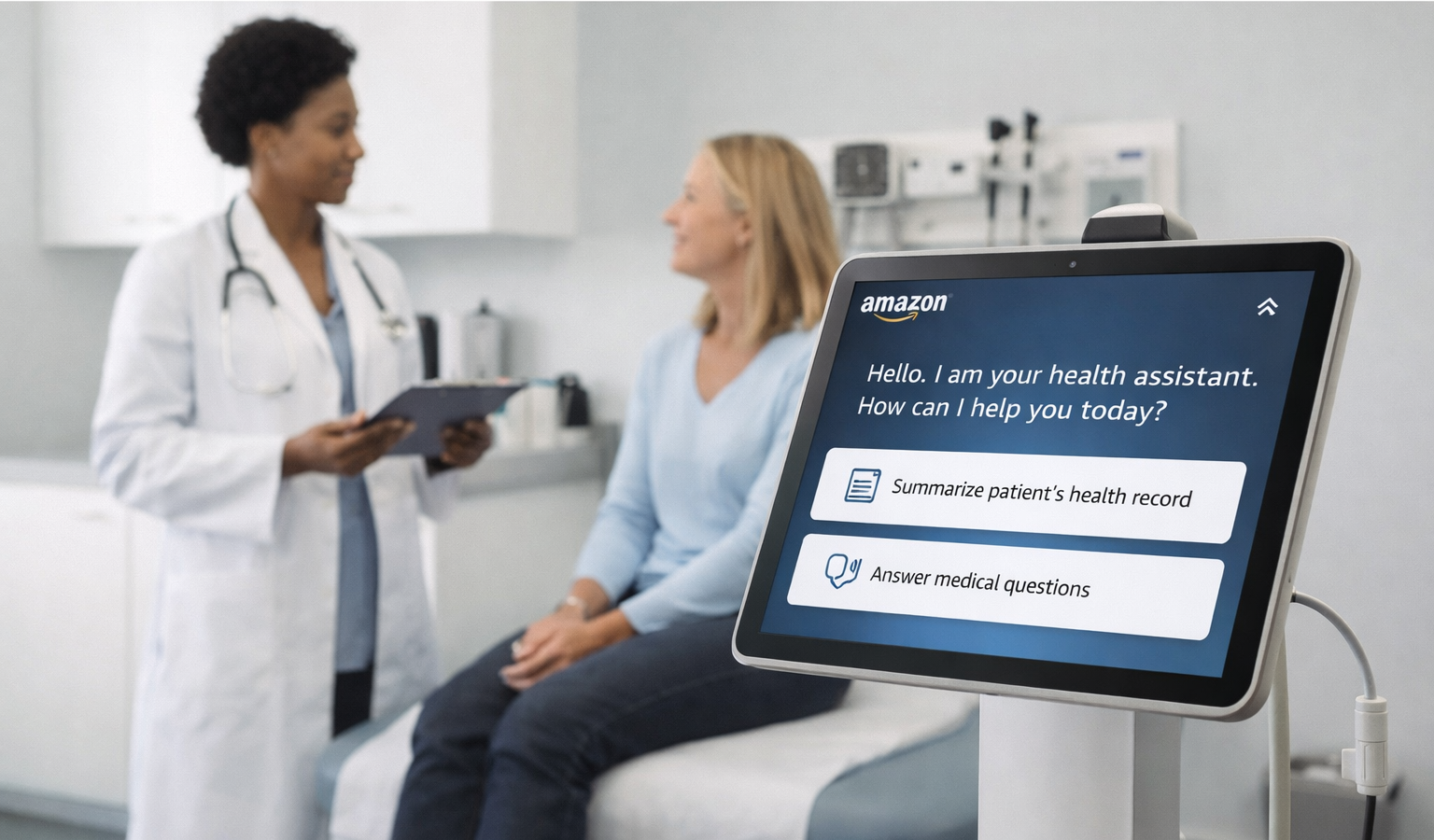
    Imagine a mother in rural Arkansas, her baby’s growth chart cruising through a tunnel of patchy internet. Then comes Amazon HealthLake, an EMR backbone perched in AWS’s cloud, instantly translating lab values into life stories. Under its watchful algorithms, unstructured notes from nurses and scribbled EKG printouts are woven into searchable threads. When her doctor clicks “Search,” every whisper of concern, every past infection, and every dosage of Tylenol surfaces in a heart beat no dusty files, no midnight phone calls.

    2. Google’s Code of Compassion

    Beyond search bars and smartphone maps, Google’s foray feels almost lyrical. Its Cloud Healthcare API listens to silent data streams of HL7 messages, DICOM images, and FHIR records and transforms them into harmonized care narratives. In a Boston research lab, an oncologist uses Google’s Vertex AI to predict chemotherapy responses, charting tumour markers from yesterday’s scan and tomorrow’s hope. The machine’s predictive heart doesn’t just calculate; it comforts, giving families a map through the darkness of uncertainty.

    3. Microsoft’s Bridge to Better Care

    Microsoft’s Azure Health Data Services stands like a luminous bridge connecting trauma centre ERs to telemedicine outposts, academic centres to small town critical access hospitals. In Seattle, a surgeon consults a colleague in Nairobi, both peering into the same live EMR, anchored by Azure’s secure vaults. Machine learning modules flag post op infection risks before a single fever spike, while Teams chat bots triage scheduling, freeing nurses to stand by bedsides rather than by keyboards.

    4. The Human Code Behind the Tech

    These are not soulless platforms; they are codified promises. Developers in each ecosystem convene with real clinicians in hushed corridors, sketching workflows on whiteboards stained by coffee. They debate: How many clicks steal a life’s moment? How many alerts drown a weary mind? From those discussions spring lighter interfaces, voice driven charting, and AI scribes that capture not only what was said, but also how it was said so the warmth of a doctor’s reassurance never gets lost in translation.

    5. The EMR Battlefield Becomes a Healing Ground

    This is no zero sum war. As Amazon, Google, and Microsoft charge forward, legacy vendors sharpen their own arsenals, with Epic weaving in generative AI and Cerner partnering with startups on mobility suites. The result? A symphony of solutions, each competing to be the gentlest, the fastest, and the kindest in turning raw data into real healing.

    In this era, silicon and stethoscopes are no longer opposites. They clasp hands in operating rooms and exam halls, whispering new possibilities into the ears of patients and providers alike. And as Big Tech builds the battleground of digital health, we find ourselves standing not on a field of war but on the dawn of a deeper care, where every byte carries a heartbeat, and every log‑in is a vow: to remember, to respond, and to heal.

    Silicon Meets Stethoscope: Big Tech’s Bold Moves Into the EMR Battlefield

    “Silicon Meets Stethoscope: Big Tech’s Bold Moves Into the EMR Battlefield”
     Amazon, Google, and Microsoft aren’t just watching; they’re building the future of digital health.

    There is a moment when innovation tiptoes past the door of tradition and then another when it bursts through, armed with cloud servers and neural nets. In hospitals and clinics across America, that moment is here: Silicon Valley’s giants, once strangers to stethoscopes, now stand shoulder to shoulder with physicians, racing to reshape how medical records live, breathe, and heal.

    1. Amazon’s Pulse in the Cloud

    Imagine a mother in rural Arkansas, her baby’s growth chart cruising through a tunnel of patchy internet. Then comes Amazon HealthLake, an EMR backbone perched in AWS’s cloud, instantly translating lab values into life stories. Under its watchful algorithms, unstructured notes from nurses and scribbled EKG printouts are woven into searchable threads. When her doctor clicks “Search,” every whisper of concern, every past infection, and every dosage of Tylenol surfaces in a heart beat no dusty files, no midnight phone calls.

    2. Google’s Code of Compassion

    Beyond search bars and smartphone maps, Google’s foray feels almost lyrical. Its Cloud Healthcare API listens to silent data streams of HL7 messages, DICOM images, and FHIR records and transforms them into harmonized care narratives. In a Boston research lab, an oncologist uses Google’s Vertex AI to predict chemotherapy responses, charting tumour markers from yesterday’s scan and tomorrow’s hope. The machine’s predictive heart doesn’t just calculate; it comforts, giving families a map through the darkness of uncertainty.

    3. Microsoft’s Bridge to Better Care

    Microsoft’s Azure Health Data Services stands like a luminous bridge connecting trauma centre ERs to telemedicine outposts, academic centres to small town critical access hospitals. In Seattle, a surgeon consults a colleague in Nairobi, both peering into the same live EMR, anchored by Azure’s secure vaults. Machine learning modules flag post op infection risks before a single fever spike, while Teams chat bots triage scheduling, freeing nurses to stand by bedsides rather than by keyboards.

    4. The Human Code Behind the Tech

    These are not soulless platforms; they are codified promises. Developers in each ecosystem convene with real clinicians in hushed corridors, sketching workflows on whiteboards stained by coffee. They debate: How many clicks steal a life’s moment? How many alerts drown a weary mind? From those discussions spring lighter interfaces, voice driven charting, and AI scribes that capture not only what was said, but also how it was said so the warmth of a doctor’s reassurance never gets lost in translation.

    5. The EMR Battlefield Becomes a Healing Ground

    This is no zero sum war. As Amazon, Google, and Microsoft charge forward, legacy vendors sharpen their own arsenals, with Epic weaving in generative AI and Cerner partnering with startups on mobility suites. The result? A symphony of solutions, each competing to be the gentlest, the fastest, and the kindest in turning raw data into real healing.

    In this era, silicon and stethoscopes are no longer opposites. They clasp hands in operating rooms and exam halls, whispering new possibilities into the ears of patients and providers alike. And as Big Tech builds the battleground of digital health, we find ourselves standing not on a field of war but on the dawn of a deeper care, where every byte carries a heartbeat, and every log‑in is a vow: to remember, to respond, and to heal.